Member Resources for students of Aikido Multnomah Aikikai in Portland Oregon.
Dojo News blog articles now hosted on http://www.multnomahaikikai.com/dojo-news
Any season is a beautiful time to visit the Japanese Gardens
but summertime is especially nice.The warm
weather, the lush greenery, and all the sounds that fill the natural space combine
to make for a wonderful experience.Tucked away between what is called the
Strolling Pond Garden and the Natural Garden is a curious device made of bamboo
called a shishi-odoshi which
translates as ‘deer-scarer’.
This dual-purpose fountain and animal chaser consists of a piece
of hollow bamboo resting with its heavy closed end against a rock.A pivot suspends its middle and the open end
points up towards the sky as water pours slowly and steadily into it.Filling up with water causes the center of
gravity to change, forcing the open end downward.This shift dumps its contents, forcing a
sudden reversal as the heavy end knocks back against the rock making a sharp
sound.The cycle repeats.
In many traditional Japanese arts, there is a concept called
jo-ha-kyu (序 破 急).The characters can translate in many
different ways.Jo is most commonly means ‘beginning’, ha when isolated can read ‘to break; to
ruin; to destroy’, and kyu reads as ‘rapid; urgent; quick’.
The term jo-ha-kyu
first appeared in writings around the 14th century by the renowned Zeami
Motokyo, creator of the Noh Theatre.Similar
to martial teachings, his writings were hidden away, shared only within
families of the Noh theatre, until they were discovered in a second hand
bookshop.He wrote, “Every phenomenon in
the universe develops itself through a certain progression.Even the cry of a bird and the noise of an
insect follow this progression.It is
called Jo, Ha, Kyu.”
This progression describes how a Noh actor should raise
their arm slowly, hold it momentarily suspended, and then quickly drop it.It also dictates the composition of the music,
progressing towards faster and more climactic tones.Even the acts of a Noh drama follow this form
towards climax.The bamboo shishi-odoshi fills slowly and just as
slowly starts to teeter.It reaches a
point where it suddenly purges itself of its water and rushes back to its
stationary position, punctuated with a loud noise.
In partner practice in aikido and iaido, there is a build-up of tension as the
pair approaches each other, a sudden break in this tension as a technique is
executed, and acceleration towards the end of the form.The solo practice of iaido kata lends itself
well to the study of jo-ha-kyu.One can isolate movements without
interference or distraction.At more
advanced levels of practice an onlooker might be able to imagine an
opponent being cut down by the strikes of the practitioner.
What forces work upon the pair or the shishi-odoshi?It is not simply the bamboo that makes the
noise.Gravity, the water, and the
positioning of the bamboo all play their part.
At the beginning of your next practice, you will face the shomen while sitting in seiza.The calligraphy on the wall is a permanent record of a moment of jo-ha-kyu by the calligrapher.If the preparation of the ink is not correct,
it will be too light or too dark.If the
composition is not considered, the lines and characters will be out of
balance.If the calligrapher lingers or
hesitates while writing, ink will pool.How heavy or
light the hand was that held the brush will show in the lines.
How will your next practice begin?And how will it end?
Get started with a series of four aikido lessons at a special price. When you schedule all four private lessons and make one payment you'll save $40!
Regular price for four lessons: $300 "Lucky Break" price: $260
Private lessons taught by Suzane Van Amburgh, 5th degree black belt, Birankai certified shidoin instructor. Learn more about Suzane Sensei. Offer limited to new private lesson students. Book before Sep.10, 2016. Location: Aikido Multnomah Aikikai, 6415 SW Macadam Ave, Portland OR 97239 Schedule: Mon, Wed, Fri, Sat time slots, subject to availability. Contact Suzane: spacetomoveinfo@gmail.comor use the "Contact us" form on the right-hand sidebar of this web page. Get started in Aikido practice with private lessons!
Fundamental Weapons Practice for all levels this Saturday! 5th and 4th kyu weapons test guidelines will be covered on Sat Feb 20 & 27. Saturdays Feb. 20 and 27, 10:30 - 11:30am: we will focus in on the weapons forms outlined in theBirankai 5th and 4th kyu guidelines.
This class, taught by Van Amburgh sensei, is for all levels.
If you've never held a bokken or jo before have no fear! Come and learn.
What does sanpo mean?
What's the difference between happo giri and suburi happo?
Senior members take advantage of this opportunity to practice the newly allocated weapons test guidelines as a set!
Sunday Morning Practice with Fleshler Senseicoming up February 28, 9am- noon. Expect a combination of body arts and weapons training.
Aikido Multnomah Aikikai 6415 SW Macadam Ave Portland OR 97239
Beginning Aikido students are often introduced to rolling practice in their first week on the mat. The experience of getting down on the ground and coming up again is fundamental and yet also instinctive. New students have so much going on mentally, emotionally and physically as they begin a new movement practice.
Small rolls, sometimes called "Bucky Ball" rolls or "baby rolls" offer teachers a rich opportunity to orient the new student, practice learning skills, foster attention skills and give them something they can do successfully and improve upon quickly.
For more senior students, the practice serves as a mental and physical warm up, calming the nervous system and relaxing the body.
Bringing attention to what you do and how you do it, matching your breathing to your movement and varying your intention in movement are all excellent ways to prepare yourself for aikido practice.
In this quiet (no-talking) video, Suzane Van Amburgh Sensei demonstrates a rolling practice sequence useful for all levels, from beginner to senior student. It begins with orientation to the relative position of body parts, rocking left and right. It progresses through use of weight shifts, finding the natural levers and counterbalances of the body, smooth transitions from sitting to side lying and up to sitting again. By the end of the video, the roll has evolved to advanced sequences requiring clear intention, core conditioning, good body control and awareness of the space around you.
Let this post serve as a reference tool and "cliff notes" for aikidoists in your regular rolling practice.
If rolling is new to you, don't try this alone. Come to the dojo or schedule a private lesson with a certified aikido teacher.
Wednesdays, 7:30pm February 4-25, 2015
(Four sessions)
Multnomah Aikikai members participate free.
Series open to the public: $60
Make your body like a blade! Use your te-gatana. Enter and cut!
In your Aikido practice, embody the principle of the sword.
The sword is ever present in Aikido practice. Yet, how many of us have familiarity with using a sword? Basic sword handling will enliven your Aikido practice. This series is open to all members for no additional charge. Know someone interested in sword? The public is welcome for a fee. The series of four classes build on each other. For this reason, commitment to the series is advised.
Participants may use wooden bokken for this introduction. If you do not have your own equipment, the dojo has a limited number of bokken available for use during class. Please preregister by January 31.
This class runs concurrent with our regular Iaido class, led by Van Amburgh Sensei. Basic sword handling skills will be introduced based on the Japanese art of Iaido. Partner exercises may include Aikido weapons forms.
Multnomah Aikikai, 6415 SW Macadam Ave, Portland OR 97239
In this Center Yourself Tuesday series for December, we will study
the fundamentals of sword work using the wooden bokken while practicing
an eight part kata. No falling is required in this class. Footwork
patterns include pivoting, sliding and stepping forward and backward. If
you do not have your own bokken you may borrow one from the school
during class time. Come practice! Center yourself with the wooden
sword, balance and breath.
During this class we will:
• Raise the sword in line with the spine
• Execute sword motions relative to the center line of the body
• Move our upper body so it’s supported by the motion of the lower body
• Develop footwork that supports movements of the sword
By practicing these skills we will :
• make good use of the ground so that
gravity becomes a friendly force
• enable our bones to transmit power
cleanly so that our muscles can relax
• engage the left hand so that it
knows what the right hand is doing
• educate the left and right half’s
of our bodies to coordinate around a central axis
• allow our ribs to
expand and contract in sync with the rise and fall of the sword and
breath
• allow our eyes to settle and align with our intention
•
improve our balance so that dynamic stability is realized
“Being centered” and “moving from center” will shift from abstract concepts to tangible experiences.
Your instructor: Suzane Van Amburgh This class is open to the public for a $10 drop in fee.Free to Regular and Community Members of Multnomah Aikikai. Tuesdays in December: 5:30-6:00pm
Find your Space to Move® at Multnomah Aikikai: 6415 SW Macadam Ave, Portland OR 97239
This post is from Biran Online, posting dated October 7, 2014.
L. Klein is the editor of Biran, The Aikido Journal of Birankai North America
Don't miss the seminars coming up in our own Northwest Region! Check out the seminar info page for details on upcoming seminars. -Suzane Van Amburgh
Check out the great video above put together by the Birankai Scholarship Committee. Real Birankai students talk about the benefits of seminars as a part of training and development in the art. It’s eight minutes long but full of action footage!
All of us in Birankai Aikido are working to fund seminars to raise our level of Aikido, Iaido and Zazen training through the T.K. & Mitsuko Chiba Endowment Fund. Our national goal is to raise $400,000 in four years and we are already funding seminars through the endowment.
Practice is a mind set and an activity where you repeat an operation or movement, assessing and attending to how you do it. You introduce new variables, try something, make mistakes, form questions, change strategy and try again.
This can happen at a very mental/analytical level or it can happen with a more diffuse mindset. We can explore, play, fall, get up, try again. Sometimes we engage in practice with knitted brow and self judgement, but learning often slows down under such circumstances. Practice can be approached with an open curious mindset, a sense of humor and compassion for self.
A dojo is a place where we “practice the way.” At Multnomah Aikikai our primary practice is the martial art of Aikido. In this class, utilizing basic movements of Aikido, you will orient to the joy of practice. Whether you continue with Aikido practice or take up another practice, you will have cultivated the inner tools to direct your own learning with compassion, a sense of humor and the joy of movement.
Tuesdays 5:30 – 6:00pm, Saturdays 10-10:30am.
FREE through Oct. 28, 2014.
After the half hour class, we invite you to stay and observe the Aikido Fundamentals class following.
Oct 11- Nov. 22. Fee $90 This series is a progressive beginners' course. Plan to begin on Saturday Oct 11. Arrive 9:45 for registration. Class starts at 10 am with Orientation to Practice and segues to aikido fundamentals class 10:30-11:30am.
Class times: Tuesday 5:30-6pm: Orientation to Practice Tuesday 6:15pm-7:15pm: Aikido Fundamentals Saturday 10-10:3am: Orientation to Practice Saturday 10:30-11:30am: Aikido Fundamentals
Note: Sat. Oct. 25 join us for an optional field trip to Eugene for a seminar with Phil Vargas Sensei. Click for details. There is no fee to observe seminar classes.
Tue/Sat schedule doesn't work for you? Become a Regular Member and practice Mon, Wed or Fri at 6:15pm. As a member you can flex your schedule and come to any unrestricted class on the weekly schedule. Click to view schedule.
Sandan as a Weapon
by Sean Sheedy, 3rd dan, Multnomah Aikikai
In his letter to the dojo after our most recent set of dan promotions, Fleshler Sensei referred to the metaphor of the student as a sword: at shodan a block of metal; at nidan a sharpened piece of steel; and at sandan a polished, integrated weapon. As a new sandan, what does it mean to “be a weapon”?
A dictionary definition is perhaps a place to start. The Oxford English Dictionary defines “weapon” as:
1. A thing designed or used for inflicting bodily harm or physical damage. 2. A means of gaining an advantage or defending oneself in a conflict or contest.
As an aikidoka seeking to reduce conflict rather than increase it, the first meaning seems problematic. Although aikido is certainly capable of resulting in bodily harm to an uke unprepared for absorbing and dissipating the power of the techniques, inflicting bodily harm or damage is not a goal of our art. The second meaning appears more promising, as defending oneself in a conflict by diffusing that conflict is a goal. One thread that is common to both meanings, however, is that of intent: in both definitions a weapon is a means of projecting one's intent into a situation of conflict.
In this sense a weapon is a specific form of tool. Just as a chisel can be used to project one's intent onto a piece of wood, thereby transforming that wood, a weapon can be used to project one's intent into a conflict, thereby transforming that conflict. The type of transformation actually achieved depends on both the intent of the wielder of the tool and his skill level. A piece of wood can be transformed into a beautiful carving with proper intent and skill with a chisel. Conversely, a different intent or the lack of sufficient skill to produce a carving can result in wood chunks only suitable for firewood. Similarly, a conflict can be transformed into peace with both the intent of diffusing the conflict and skill with a weapon. Lacking peaceful intent or sufficient skill can result in more conflict and damage.
One consequence of this observation is that a weapon, like a chisel, has no intrinsic morality. Rather, the morality is derived from the intent of the tool wielder being transmitted through the otherwise inert tool. Seneca the Younger relayed a similar observation some 2000 years ago:
Quemadmodum gladius neminem occidit: occidentis telum est. A sword by itself does not slay; it is merely the weapon used by the slayer.
Though necessary, proper or moral intent is not sufficient to successfully project one's will to transform. Skill acquired through study and regular practice is also required or the result can be indistinguishable from that of bad intent. This requirement for a constant refining and honing applies to the tool itself as well as the user of the tool. Chisels and swords must be actually handled to develop the skill of their use, but doing so causes them to nick and dull, and eventually requires them to be sharpened. Even when sitting unused, chisels and swords must be cleaned and oiled or they may rust and not be ready when required. Similarly, even if not engaged in their art the artisan and warrior must maintain their basic physical and mental conditioning or risk not being ready to apply their tools when required. The tool and the tool user are thus inseparably intertwined: both must continue to develop together in an endless cycle or forfeit the ability to successfully transform their surroundings.
This fundamental inseparability between tool and tool-user is what it means as a martial artist to “be a weapon”. If I as an aikidoka am a weapon, I am both the intentional agent and the tool to achieve a transformation from conflict to non-conflict. If I am a weapon, I must consciously and consistently develop my skills, renew my sharpness, and avoid deterioration due to inattention; failure to do so risks producing firewood instead of a carving.
Nonviolence is a powerful and just weapon which cuts without wounding and ennobles the man who wields it. It is a sword that heals.
-- Martin Luther King, Jr.
How is a World Cup soccer player like an Aikidoist?
results
indicate skill learning leads to the development of specialized
neuronal circuits, which allow the execution of fast and accurate
sequential movements without average increases in brain activity. - See
more at: http://elifesciences.org/content/2/e00801#sthash.FKxErGU0.dpuf
results
indicate skill learning leads to the development of specialized
neuronal circuits, which allow the execution of fast and accurate
sequential movements without average increases in brain activity. - See
more at: http://elifesciences.org/content/2/e00801#sthash.FKxErGU0.dpuf
When you've practiced a movement mindfully over a long time, you don't have to think so hard to accomplish the motion and your brain is free to think about other things. For example, if you don't have to concentrate hard on where you are going to step, then you can start to pay attention to your breath or the weight in your partner's back foot. You can improve your efficiency, performance, expression of power - all with less effort.
or, as Tom Stafford writes about World Cup footballers:
"Bergkamp doesn't have to think about his foot when he wants to control a
ball, so he's free to think about the wind, or the defender, or when
exactly he wants to control the ball."
Getty Images
Enjoy this article excerpt on the brain processes involved in performing dazzling feats on the soccer field and how you can apply them to everyday activities like driving a car.... or maybe even performing your ikkyo!
results
indicate skill learning leads to the development of specialized
neuronal circuits, which allow the execution of fast and accurate
sequential movements without average increases in brain activity. - See
more at: http://elifesciences.org/content/2/e00801#sthash.FKxErGU0.dpuf
results
indicate skill learning leads to the development of specialized
neuronal circuits, which allow the execution of fast and accurate
sequential movements without average increases in brain activity. - See
more at: http://elifesciences.org/content/2/e00801#sthash.FKxErGU0.dpuf
-Suzane Van Amburgh
article excerpt by Tom Stafford from BBC Future:
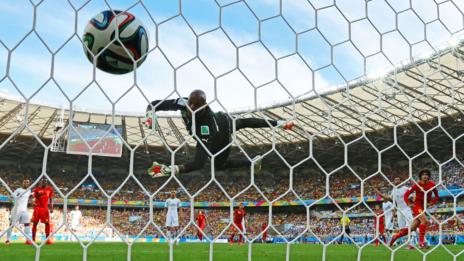
The 2014 World Cup in Brazil has already given us a clutch of classic
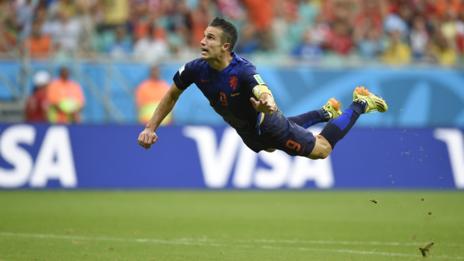
moments, like Robin Van
Persie’s perfect header to open the Dutch onslaught against the Spanish.
We can't help but be dazzled by the skills on
display, and at times it seems as if the footballers have access to
talents that are not just beyond description, but beyond conscious
comprehension. Yet magical moments from World Cup players have a lot more in common with everyday intelligence than you
might think.
Are you exhibiting the same kind of skills Robin Van Persie shows on the pitch when you're driving your car? (AFP/Getty Images)
We often talk about astonishing athletic feats as if
they are something completely different from everyday thought. When we
say a footballer like Lionel Messi acts on instinct, out of habit or due to his
training, we distance what they do from that we hear echoing within our
own heads.
The idea of "muscle memory" encourages this – allowing us to
cordon off feats of motor skill as a special kind of psychological
phenomenon, something stored, like magic potion, in our muscles. But the
truth, of course, is that so called muscle memories are stored in our
brains, just like every other kind of memory. What is more, these
examples of great skill are not so different from ordinary thought.
If
you speak to world-class athletes, such as World Cup footballers, about
what they do, they reveal that a lot of conscious reasoning goes into
those moments of sublime skill. Here's England's Wayne Rooney, in 2012,
describing what it feels like as a cross comes into the penalty box:
"You're asking yourself six questions in a split second. Maybe you've
got time to bring it down on the chest and shoot, or you have to head it
first-time. If the defender is there, you've obviously got to try and
hit it first-time. If he's farther back, you've got space to take a
touch. You get the decision made. Then it's obviously about the
execution."
All this in half a second! Rooney is obviously thinking more, not less, during these most crucial moments.
(Getty Images)
This
is not an isolated example. Dennis Bergkamp delighted Dutch fans by
scoring a beautiful winning goal from a long pass in the 1998 World Cup
quarter final against Argentina In a subsequent interview
Bergkamp describes in minute detail all the factors leading up to the
goal, from the moment he made eye contact with the defender who was
about to pass the ball, to his calculations about how to control the
ball. He even lets slip that part of his brain is keeping track of the
wind conditions. Just as with Rooney, this isn't just a moment of
unconscious instinct, but of instinct combined with a whirlwind of
conscious reasoning. And it all comes together.
Studies of the way the brain embeds new skills, until the
movements become automatic, may help make sense of this picture. We know
that athletes like those performing in the World Cup train with many
years of deliberate, mindful, practice.
As they go through their drills, dedicated brain networks develop, allowing the movements to be deployed with less effort and more control. As well as the brain networks involved becoming more refined, the areas of the brain most active in controlling a movement change with increased skill
– as we practice, areas deeper within the brain reorganise to take on
more of the work, leaving the cortex, including areas associated with
planning and reasoning, free to take on new tasks.
But this
doesn't mean we think less when we're highly skilled. On the contrary,
this process called automatisation means that we think differently.
Bergkamp doesn't have to think about his foot when he wants to control a
ball, so he's free to think about the wind, or the defender, or when
exactly he wants to control the ball.
For highly practiced movements we
have to think less about controlling every action but what we do is
still ultimately in the service of our overall targets (like scoring a
goal in the case of football). In line with this, and contrary to the
idea of skills as robotic-reflexes, experiments show that more
flexibility develops alongside increased automaticity.
Intelligence involves using conscious deliberation at the
right level to optimally control your actions. Driving a car is easier
because you don't have to think about the physics of the combustion
engine, and it's also easier because you no longer have to think about
the movements required to change gear or turn on the indicators. But
just because driving a car relies on automatic skills like these,
doesn't mean that you're mindless when driving a car. The better
drivers, just like the better footballers, are making more choices each
time they show off their talents, not fewer.
So footballer's
immense skills aren't that different from many everyday things we do
like walking, talking or driving a car. We've practiced these things so
much we don't have to think about how we're doing them. We may even not
pay much attention to what we're doing, or have much of a memory for
them (ever reached the end of a journey and realised you don't recall a
single thing about the trip?), but that doesn't mean that we aren't or
couldn't. In fact, because we have practiced these skills we can deploy
them at the same time as other things (walking and chewing gum, talking
while tying our shoe laces, etc). This doesn't diminish their mystery,
but it does align it with the central mystery of psychology - how we
learn to do anything.
Read the whole story on BBC Future:
http://www.bbc.com/future/story/20140619-whats-in-a-footballers-head
ELife research study on skills acquisition and neural activity:
http://elifesciences.org/content/2/e00801
Study revealing positive transfer effects: The authors also measured potential positive transfer effects of
learning from one motor task to another. Four experienced cascade
jugglers and 5 novices learned to bounce juggle, practicing regularly
for 5 weeks. The experienced jugglers showed positive transfer of
learning, maintaining a lead of approximately 6-10 days over the
novices, even as both groups automatized the new skill.
http://www.ncbi.nlm.nih.gov/pubmed/16280317